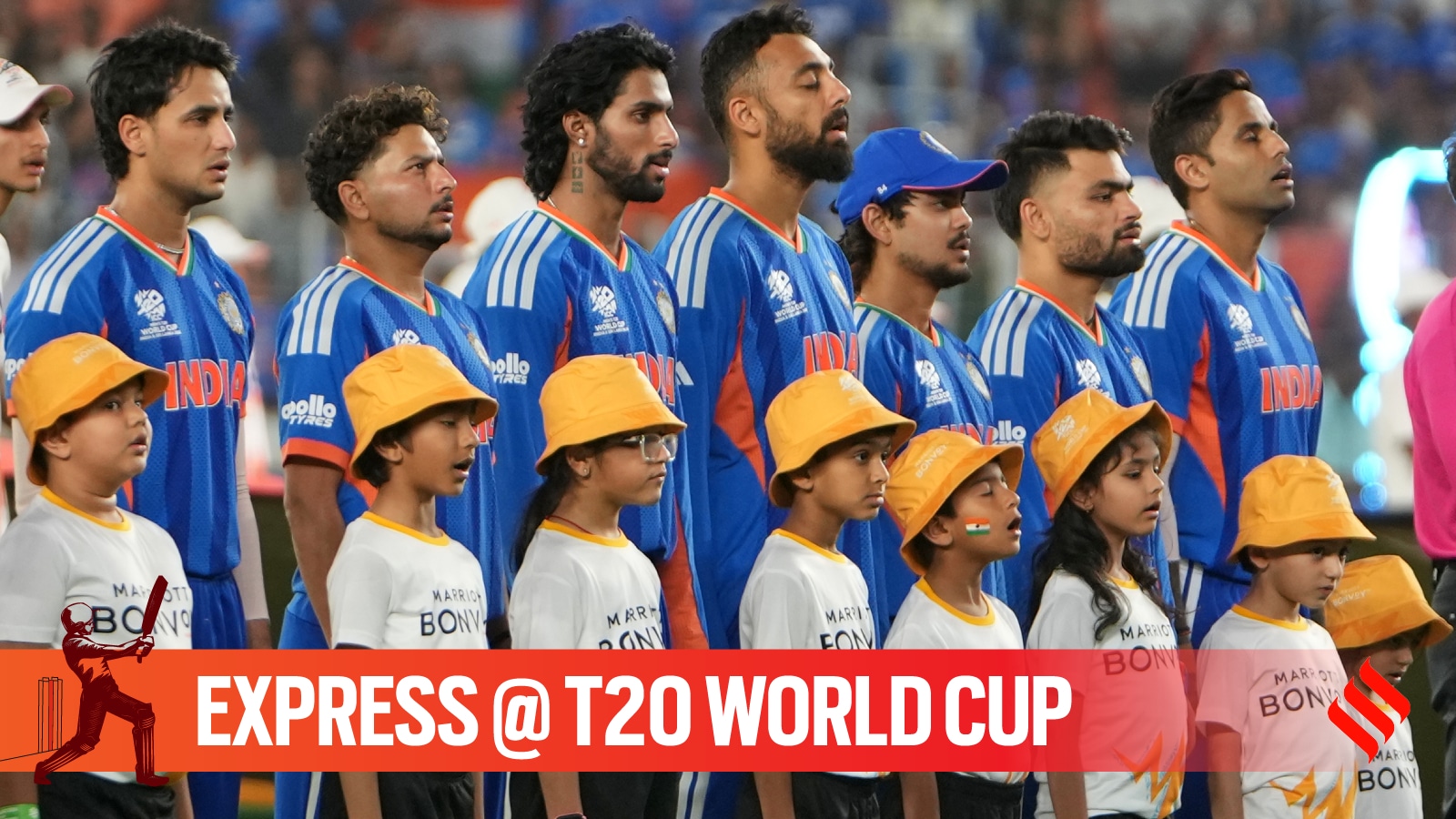
India's Semi-Final Equation: Win Big, Boost NRR, & Hope For Results
The ICC T20 World Cup 2026 has reached a fever pitch, and for cricket powerhouse India, the path to the semi-finals has suddenly become a complex equation involving dominant performances, a significantly improved Net Run Rate (NRR), and a fervent hope for favourable outcomes in other crucial matches. After a setback in the Super Eight stage, the Men in Blue find their **cricket semi-final hopes** hanging precariously, requiring a strategic shift and an injection of their signature aggressive play.
The Tightrope Walk: India's Semi-Final Hopes Hanging by a Thread
India’s journey through the group stage was marked by a familiar air of inevitability. Four wins, clinical performances, and a seemingly settled batting unit painted a picture of a team cruising towards the knockout stages. However, this dominant narrative took a sharp turn at the Narendra Modi Stadium in Ahmedabad, where South Africa handed India a crushing 76-run defeat in their opening Super 8 fixture. This loss didn't just dent their momentum; it piled immense pressure on the team in the hotly contested race for the semi-finals.
The match saw South Africa, after being put in to bat, recover from an early wobble at 20 for 3, thanks to a superb counter-attacking innings of 63 off just 35 balls from David Miller. Jasprit Bumrah had initially rocked the Proteas with figures of 3 for 15, becoming India's leading wicket-taker in T20 World Cups, but Miller's onslaught propelled them to a challenging 187 for 7. In response, India's chase unravelled dramatically. They slumped to 51 for 5 by the tenth over, struggling to adapt to a surface where the ball gripped and held. Spinner Keshav Maharaj then delivered the final blows, extinguishing any lingering Indian hopes with three wickets in a single over.
This heavy defeat has not only tested the team's resilience but has also significantly impacted their Net Run Rate, a vital tie-breaker in multi-team tournaments. The stakes are incredibly high, as seen with the recent mathematical elimination of Bangladesh from contention for a top-four finish after their sixth successive loss in seven matches. For a deeper dive into how other teams are faring and the broader context of the tournament, you can read more about how
Bangladesh was eliminated, and India's semi-final hopes are on edge.
The NRR Conundrum: Why Every Run and Wicket Matters
Net Run Rate (NRR) is often the silent killer in tight cricketing tournaments, and its importance for India’s **cricket semi-final hopes** cannot be overstated. Simply put, NRR is calculated by subtracting the average runs per over conceded by a team from the average runs per over scored by that team. A significant win boosts NRR, while a heavy loss can cripple it. India’s 76-run thrashing by South Africa has left their NRR in a precarious state, making their remaining Super Eight matches against Zimbabwe and West Indies not just about winning, but about winning *big*.
Former cricketer and astute commentator Aakash Chopra highlighted this very point ahead of India’s crucial encounter with Zimbabwe. While winning both remaining matches is a non-negotiable prerequisite for India to advance, the margin of victory becomes paramount if other results don’t fall into place. A dominant victory, for instance, scoring quickly and restricting the opposition to a low total, can drastically improve NRR. Conversely, even a win achieved slowly or after conceding too many runs might not be enough. The team needs to be ruthless, aiming to maximize their scoring rate while minimizing the opposition's, effectively trying to improve their run differential as much as possible in every over played. This means aggressive batting from the outset and disciplined, wicket-taking bowling throughout the innings.
Reclaiming Aggression: Chopra's Blueprint for India's Batting
Aakash Chopra’s analysis goes beyond mere mathematics; he pinpoints a fundamental issue in India's current batting approach that, if unaddressed, could jeopardize their **cricket semi-final hopes**. Chopra laments a deviation from the aggressive, fearless brand of cricket India has prided itself on in recent years. "India took pride in saying we hammer teams and score 250, 260 or 270," he noted, contrasting this with a current template that often settles for "just 180-190." While 180-190 might suffice on some pitches, Chopra rightly points out that "good teams chase those totals easily."
The critique is two-fold:
- Early Aggression Leading to Caution: Chopra observes that India has batters at the top who "go hammer and tongs from ball one and lose their wicket." While intent is good, early wickets then lead to the second, more problematic issue.
- Excessive Caution in the Middle Order: Following early wickets, Chopra sees batters coming in who are "too cautious and conservative." He argues they "start eating deliveries regardless of the pitch, conditions or the bowler," playing the situation too defensively and "fall behind in the game." This conservative approach was evident, in his opinion, in Suryakumar Yadav's innings against South Africa, where he felt Yadav was "too slow," leaving "the mountain too high for others to climb."
Chopra's solution is clear: India must bring back their "explosive brand of cricket." He identifies Suryakumar Yadav as "the man for that role," urging him to bat at number three with freedom and execute his natural, aggressive game. For India to overcome their NRR challenges and solidify their semi-final bid, they need to shed this cautious template. This means maintaining high strike rates throughout the innings, minimizing dot balls, and consistently looking for boundaries. It's about collective intent – from the powerplay to the death overs – to score as many runs as possible, as quickly as possible. To dive deeper into Chopra's specific recommendations for India's tactical approach, you can read more here:
India's Semifinal Path: Chopra Demands Aggressive Cricket & NRR Boost.
The External Factors: Hoping for Favorable Outcomes
While India’s on-field performance and strategic adjustments are paramount, their **cricket semi-final hopes** also hinge on external factors – specifically, the results of other matches in their Super Eight group. Aakash Chopra succinctly put it: India needs to win both of their remaining matches, but they will also be "hoping that South Africa win their games against West Indies and Zimbabwe."
Why is this hope so crucial? If South Africa, already in a strong position, continues their winning streak, it simplifies India’s path significantly. It creates a clearer scenario where India, by winning their own games, can secure a spot without excessive reliance on NRR. However, if South Africa falters in either of their matches, especially against West Indies, the group could become incredibly congested. In such a scenario, Net Run Rate would become the definitive tie-breaker, thrusting India’s aggressive scoring and restrictive bowling into the absolute spotlight. The more straightforward path involves their primary competitors either winning or losing cleanly, preventing complex three-way ties where NRR becomes the ultimate arbiter.
The Road Ahead: Key Matches and Strategic Imperatives
The immediate focus for India is their upcoming Super Eight match against Zimbabwe at the MA Chidambaram Stadium in Chennai. This game is not just about securing two points; it's about making a resounding statement and bolstering their NRR. A substantial win is non-negotiable. This requires a calculated yet aggressive approach:
- Batting First: If India bats first, they must aim for an imposing total well over 200, playing with the freedom Chopra advocated.
- Chasing: If they chase, they must do so rapidly, minimizing wickets lost and accelerating towards the target to improve their NRR significantly.
- Bowling: The bowlers, led by Bumrah, must be disciplined, aiming for early breakthroughs and restricting the opposition to the lowest possible total.
Team selection, batting order flexibility, and clear communication of intent will be vital. The management needs to empower the players to take calculated risks and play fearlessly, remembering the "hammer teams" mantra that once defined their white-ball cricket.
In conclusion, India’s **cricket semi-final hopes** are currently a tantalizing mix of self-reliance and external dependence. They need to unleash their explosive batting, execute flawless bowling, secure maximum points from their remaining fixtures, and simultaneously keep a keen eye on the outcomes of their rivals. The journey ahead promises to be thrilling, demanding nothing less than India's absolute best to turn their complex equation into a triumphant qualification.